


Clipping
1 de August de 2008
Author: Adalberto Silveira Passos Abstract: This article analyzes the political debate concerning to the implantation of the digital TV in Brazil, taking as reference the speech of Hélio Costa, Brazilian Secretary of Communications, at the public hearing of the Committee on Science, Technology, Communication and Computer Science, of the House […]
30 de May de 2008

Author: Lesley McAllister Abstract: Although many developing countries have environmental statutes, regulations, and resolutions on the books, these laws are rarely enforced and often ignored. Making Law Matter presents the first book-length treatment of an innovative prosecutorial institution, the Brazilian Ministrio Publico, which refashioned itself in the 1980s into a […]
1 de January de 2008
Author: Rafael Pons Reis Abstract: This thesis main goal is to examine the performance of government agencies and interest groups in the formation of official position in the Brazilian Meeting of the Parties to the Cartagena Protocol. So, what follows is an attempt to examine the extent to which the […]
30 de December de 2007
Author: Luiz Alberto dos Santos Abstract: This Thesis approaches the behavior of the interest groups and its interactions with the bureaucracy and the politicians in the scope of the political systems of Brazil and the United States of America, aiming to make a comparative analysis of the respective pressure systems […]
24 de April de 2007
Authors: Wagner Pralon Mancuso and Amâncio Jorge de Oliveira Abstract: The Brazilian business community became involved in a noteworthy process of organization and political mobilization throughout the 1990’s. Its action branched out into different areas, both in the domestic sphere, with the campaign for the reduction of the Brazil cost; […]
12 de February de 2007
Author: Orozimbo José de Moraes Abstract: The purpose of this work is to analyse the environmental economics instruments, based in microeconomics and according to the policy matrix of The World Bank. Follow the evolution of environmental policy instruments from the firsth wave of comand and control instruments, the second wave […]
1 de January de 2007
Authors: Marcionila Fernandes and Rosa Elizabeth Acevedo Marin Abstract: The objective of this work is to understand the social relations involved in the collection and extraction of products from the Amazon rainforest, and to identify the extent to which populations possessing ethnobotanical knowledge are socially integrated. Among other issues, the […]
29 de September de 2006
Author: Renato Lima de Oliveira Introduction: Engaging with the Legislative Branch is, and will always be, a major challenge for the Executive Branch. In every ministry, in every federal regulatory agency, and within the Presidency itself, Parliamentary Advisory Offices¹ have been established, playing a fundamental role in ensuring that this […]
1 de January de 2006
Author: Antônio Augusto de Queiroz Summary: Decision-making process — Legislative process — How laws are made — Performance and monitoring of work in Congress — Pressure groups — Case studies in the FHC and Lula governments — Tactics of the FHC and Lula governments — Plenary language: political-parliamentary glossary
1 de January de 2006
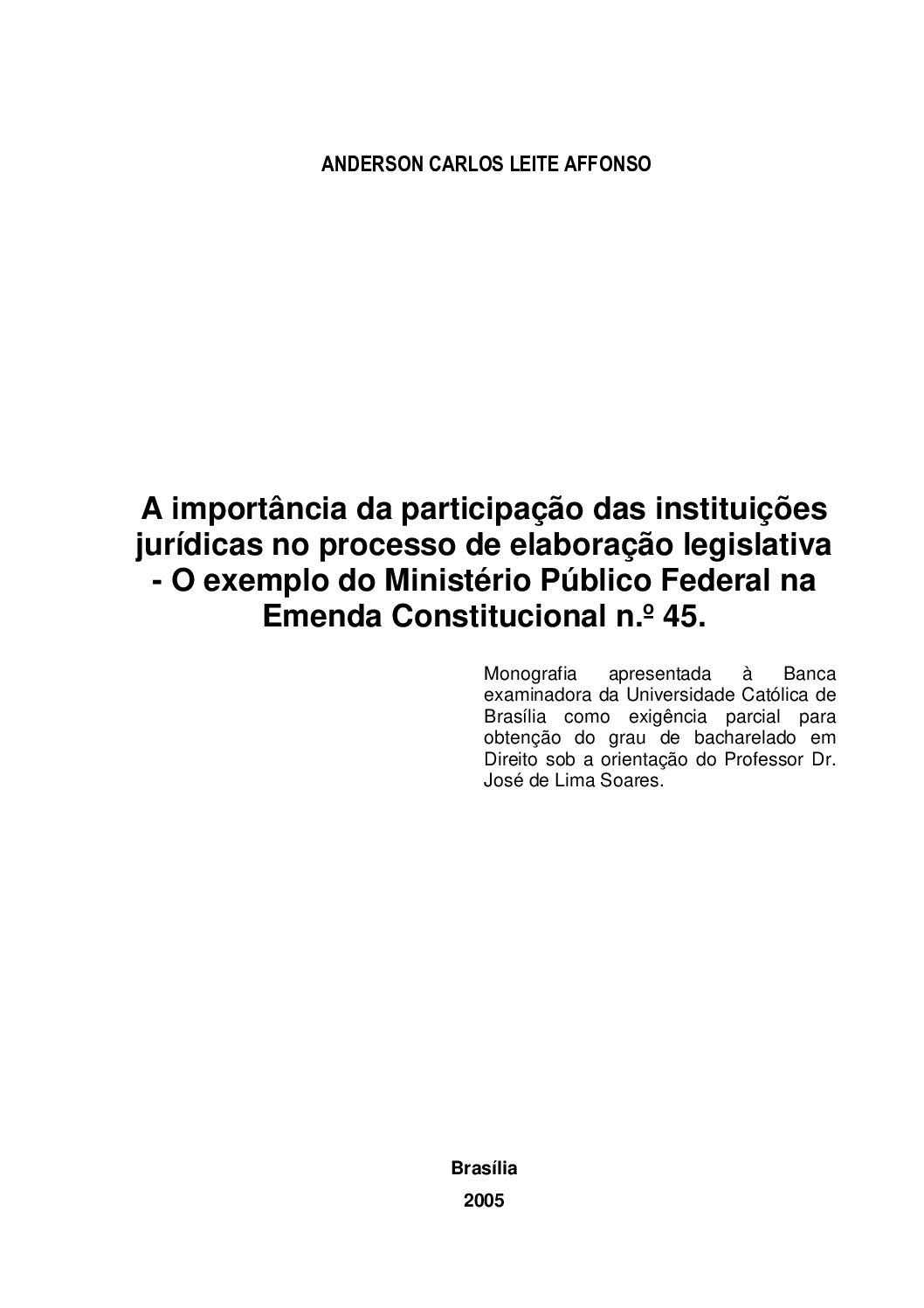
Author: ANDERSON CARLOS LEITE AFFONSO Abstract: This research examines the participation of the Federal Public Prosecutor’s Office in the legislative process concerning the drafting of Constitutional Amendment No. 45. It addresses the functions of the legislative branch and the existence of pressure groups defending specific interests, as well as the […]
1 de December de 2005

Authors: GUSTAVO HENRIQUE FIDELES TAGLIALEGNA and PAULO AFONSO FRANCISCO DE CARVALHO Abstract: This paper analyzes the role of pressure groups in the formulation of public policies in the National Congress. More specifically, it conducts a case study of the processing of the Biosafety Bill, which gave rise to Law No. […]
1 de December de 2005
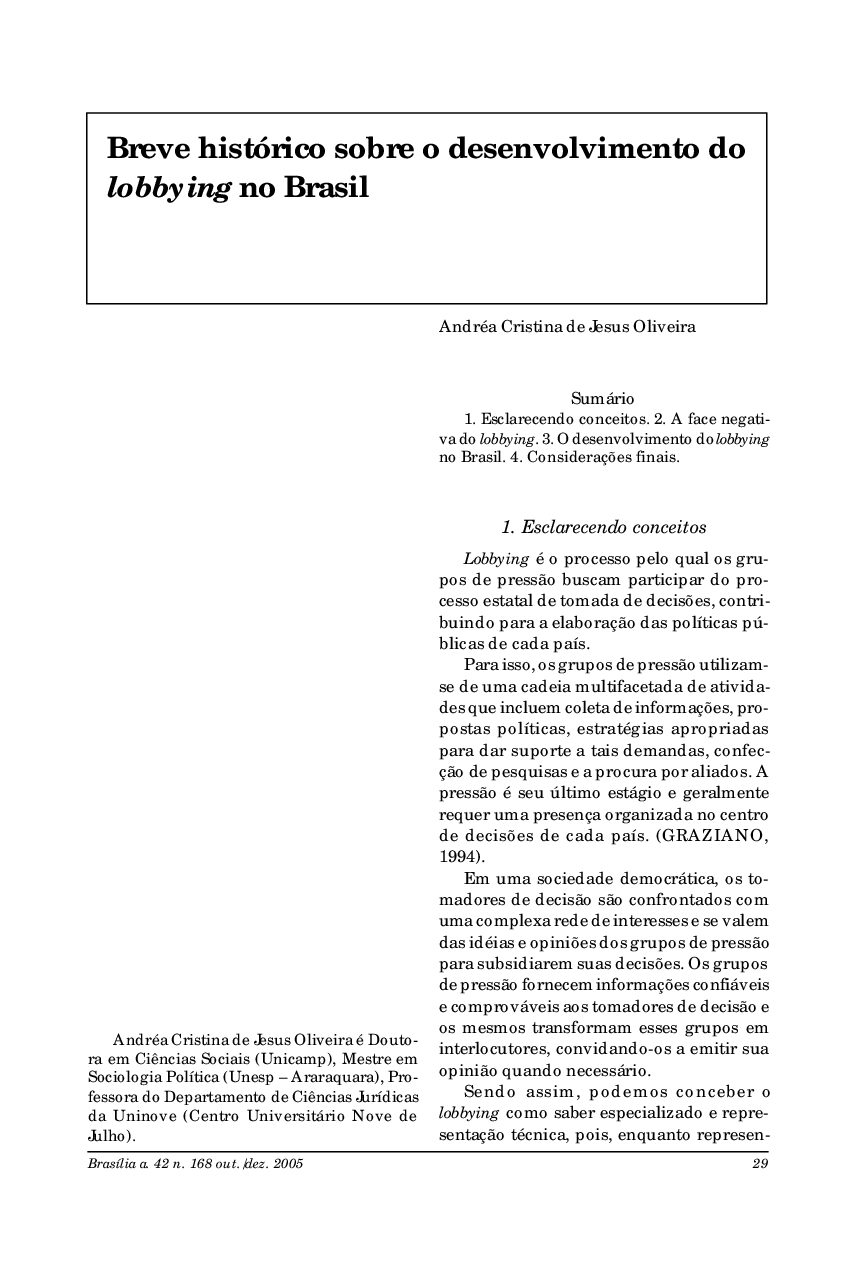
22 de November de 2005

Author: BERNARDO VIANNA DE MELLO FRANCO Abstract: It discusses the role of blogs in covering the Mensalão crisis and analyzes the changes this internet tool brought to political news coverage. It explains the principles of the technology and presents studies that describe blogs as the foundation of citizen journalism, where […]
1 de July de 2005
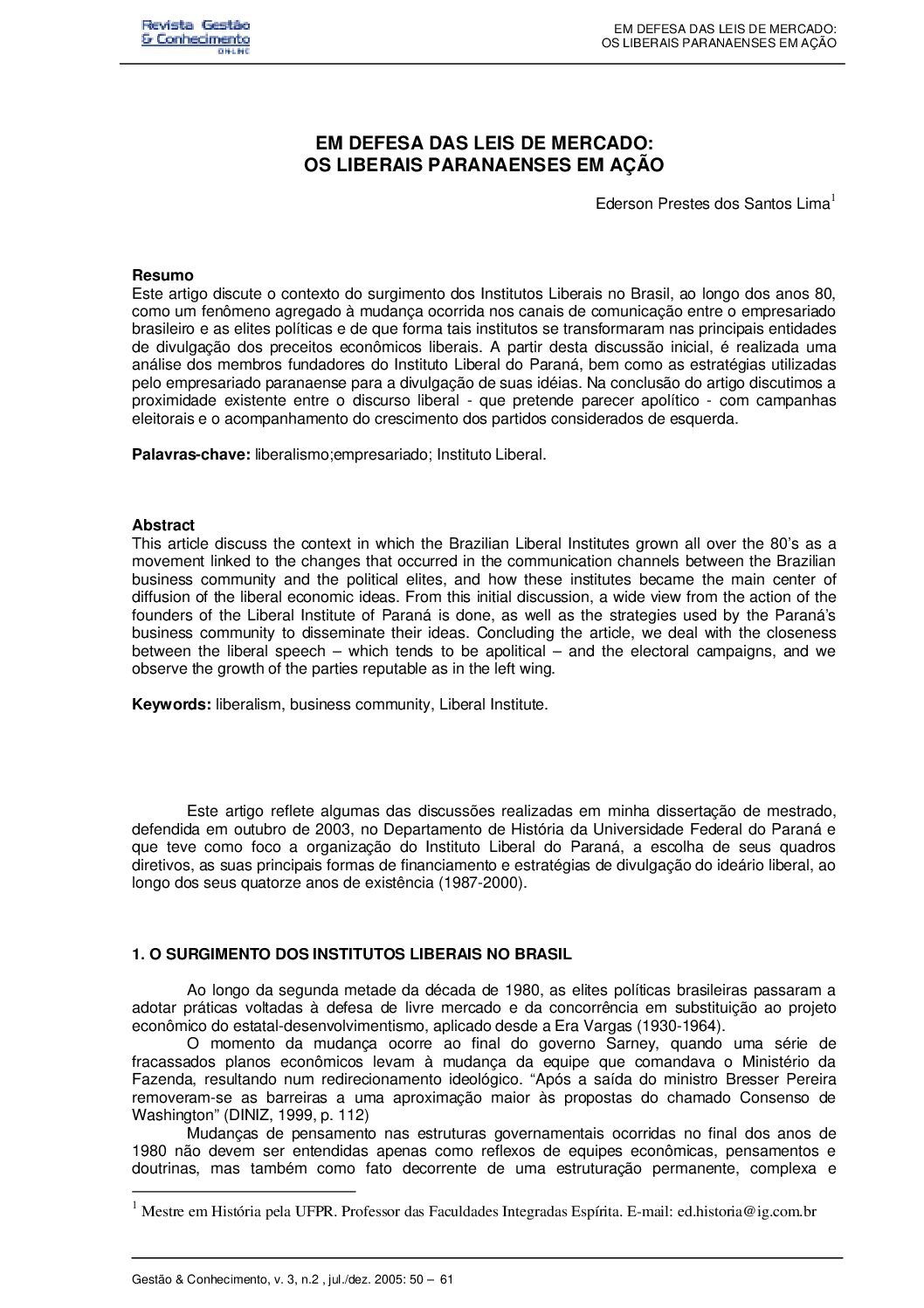
Author: Ederson Prestes Santos Lima Abstract: This article discusses the context of the emergence of Liberal Institutes in Brazil during the 1980s, as a phenomenon linked to the shift in communication channels between Brazilian business leaders and political elites, and how these institutes became the main entities for disseminating liberal […]
1 de July de 2005
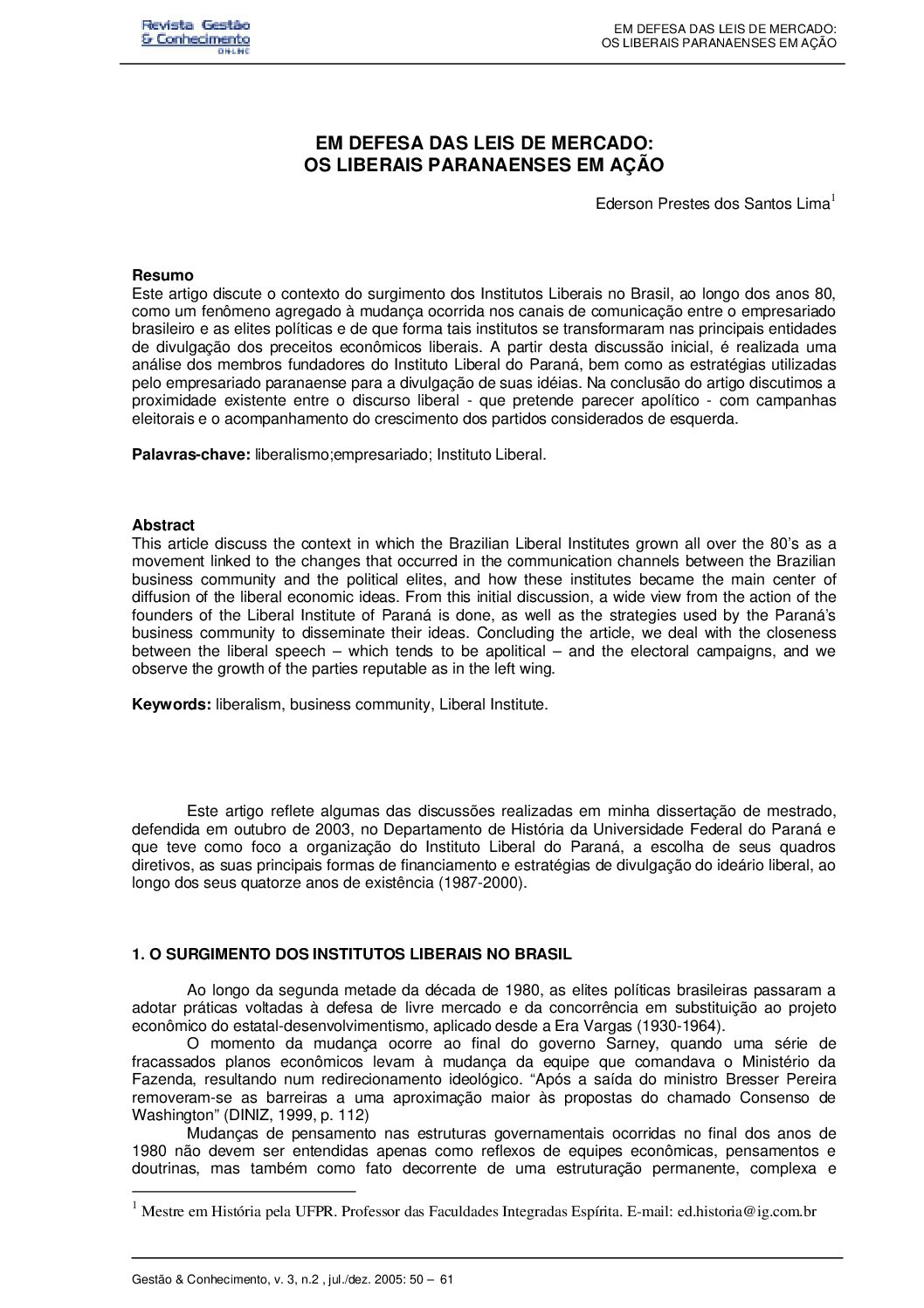


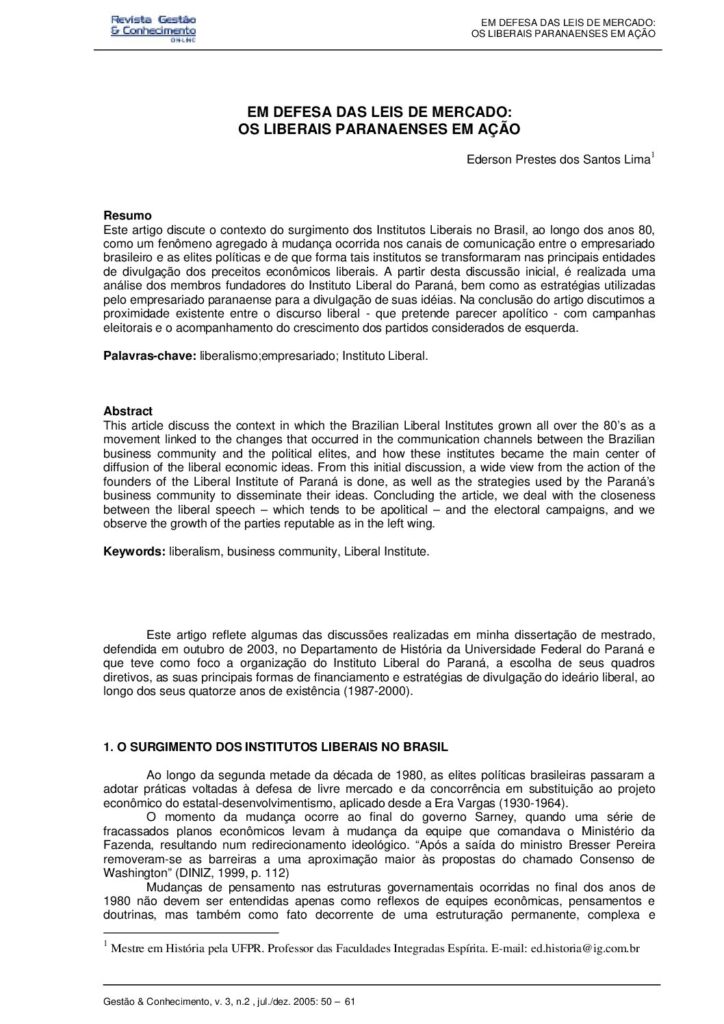
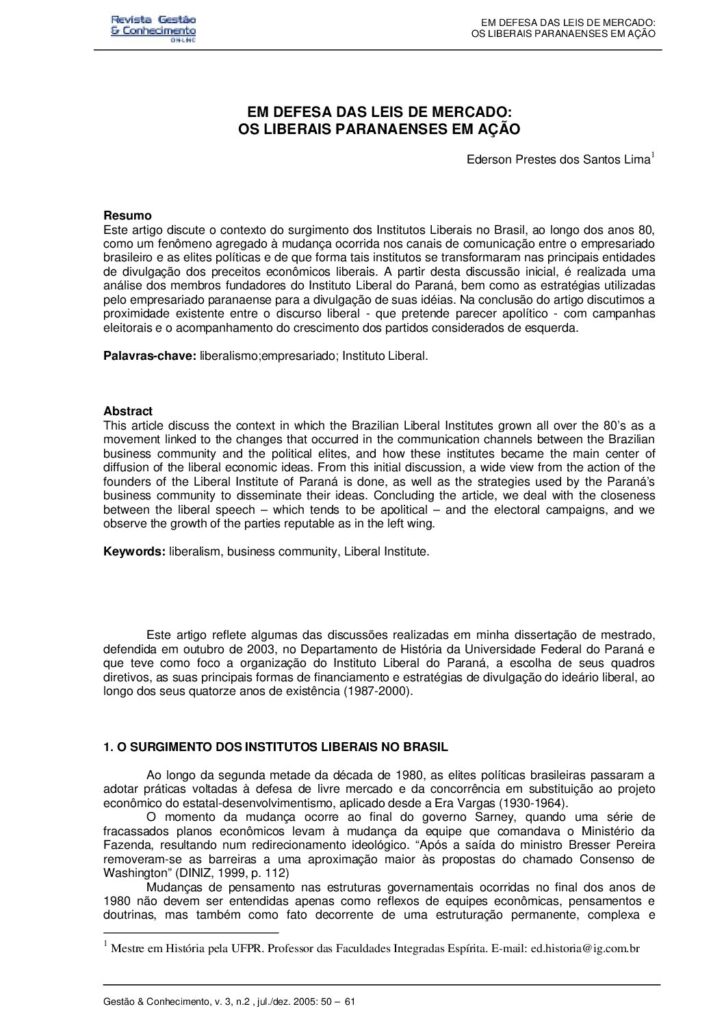
Author: Ederson Prestes Santos Lima Abstract: This article discuss the context in which the Brazilian Liberal Institutes grown all over the 80’s as a movement linked to the changes that occurred in the communication channels between the Brazilian business community and the political elites, and how these institutes became the […]