


Clipping
25 de August de 2017
Author: Helga do Nascimento de Almeida Abstract: Being a very recent event in history, studies on internet and politics have flourished in the beginning of the 21st century. Specifically on the absorption and use of this tool by the legislative branch, which is the main focus of this thesis, Cristina […]
25 de August de 2017
Author: Helga do Nascimento de Almeida Abstract: Being a very recent event in history, studies on internet and politics have flourished in the beginning of the 21st century. Specifically on the absorption and use of this tool by the legislative branch, which is the main focus of this thesis, Cristina […]
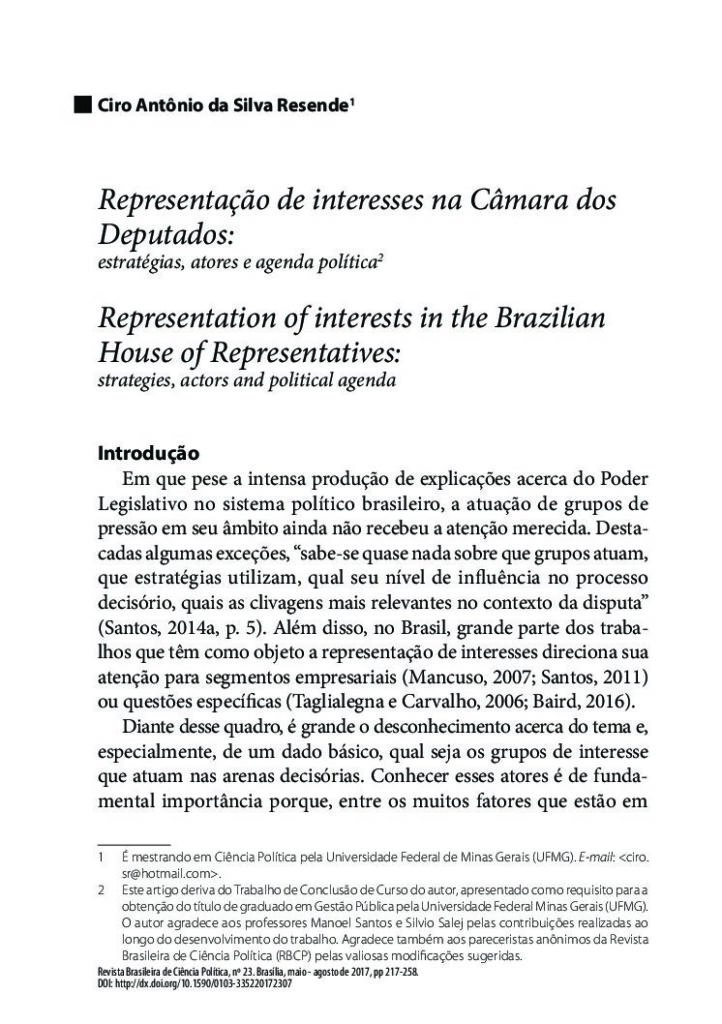
31 de March de 2017
Author: Ciro Antônio da Silva Resende Abstract: Some authors have already shown that, in the Legislature context, the committee is the locus for which is directed a great part of the work of the interest groups. Thus, the aim of this article is to carry out a descriptive study about […]
10 de March de 2017
Author: GIOVANNA DE MOURA ROCHA LIMA Abstract: This Thesis investigates the constitutionalization of public policies and what has been its amendment pattern in post-1988 Brazil. We offer a criteria for selecting relevant proposed amendments to the Constitution in the Brazilian case and evaluate which topics of public policy were constitutionalized, […]
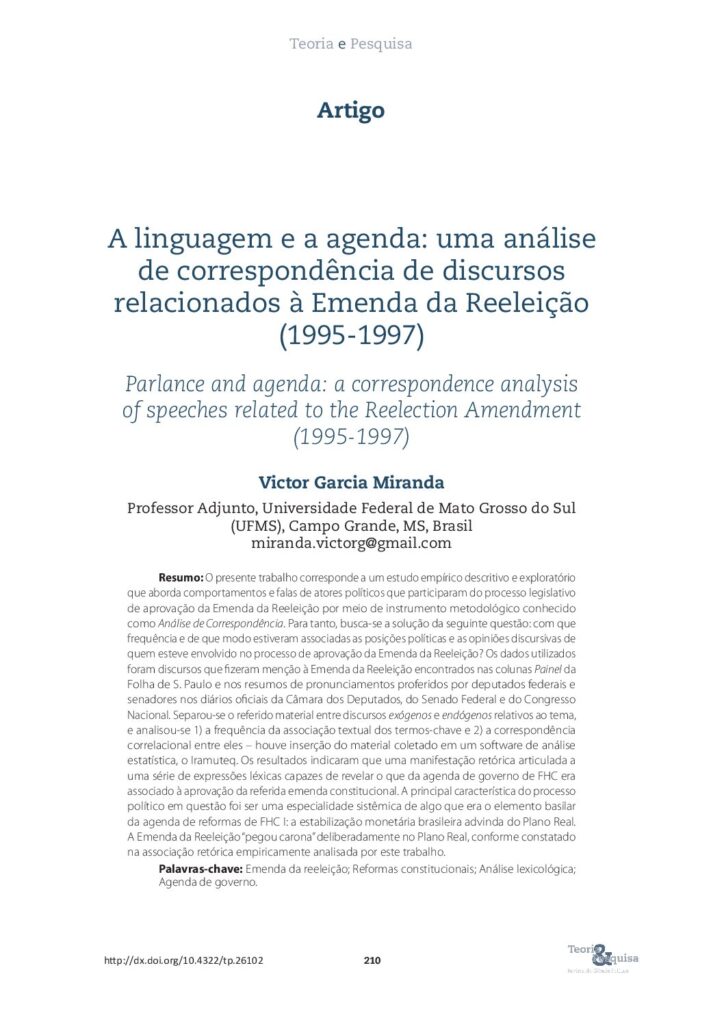
24 de January de 2017
Author: Victor Garcia Miranda Abstract: This work corresponds to a descriptive and exploratory empirical study that addresses the behaviors and speeches of political actors who participated in the legislative process of approving the Reelection Amendment, using a methodological instrument known as Correspondence Analysis. To this end, it seeks to answer […]
1 de January de 2017
Author: Matheus Pina Abstract: Brazilian political reality changed drastically with the democratization at the end of the 80’s. Because of that opening, we saw a growing number of political actors seeking to influence the political agenda of the nation, these actors started to have great weight on the deliberative process, […]
1 de January de 2017
Author: Matheus Pina ABSTRACT: Brazilian political reality changed drastically with the democratization at the end of the 80’s. Because of that opening, we saw a growing number of political actors seeking to influence the political agenda of the nation, these actors started to have great weight on the deliberative process, […]
1 de January de 2017
Author: Antônio Francisco Frota Neves Abstract: The present research aims to analyze the legal nature of the obligations arising from the promises of electoral campaigns made by candidates for elective positions to the Executive Branch, especially in the Federal sphere, as well as the responsibilities arising from noncompliance of the […]
1 de January de 2017
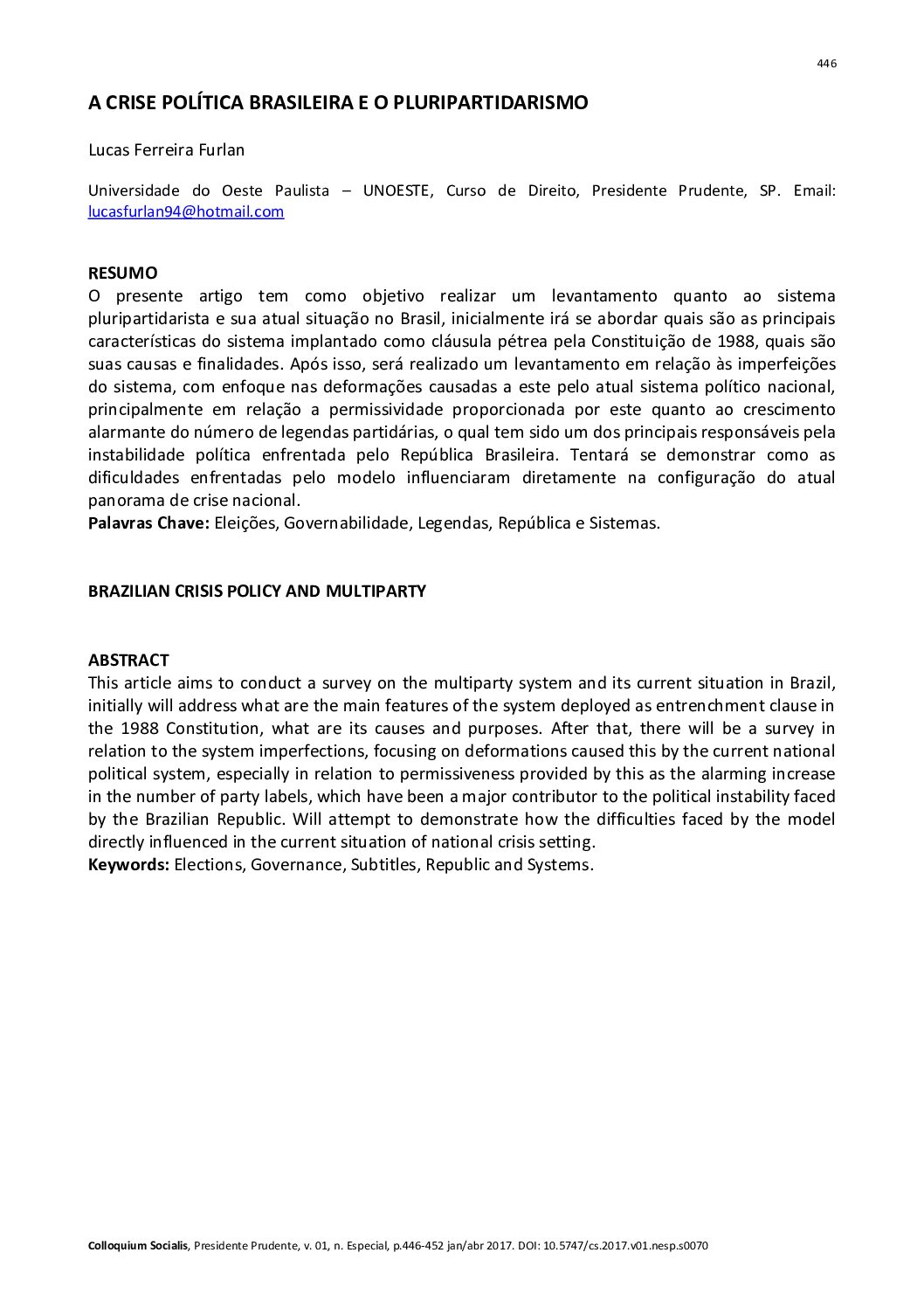
Author: Lucas Ferreira Furlan ABSTRACT: This article aims to conduct a survey on the multiparty system and its current situation in Brazil, initially will address what are the main features of the system deployed as entrenchment clause in the 1988 Constitution, what are its causes and purposes. After that, there […]
24 de December de 2016
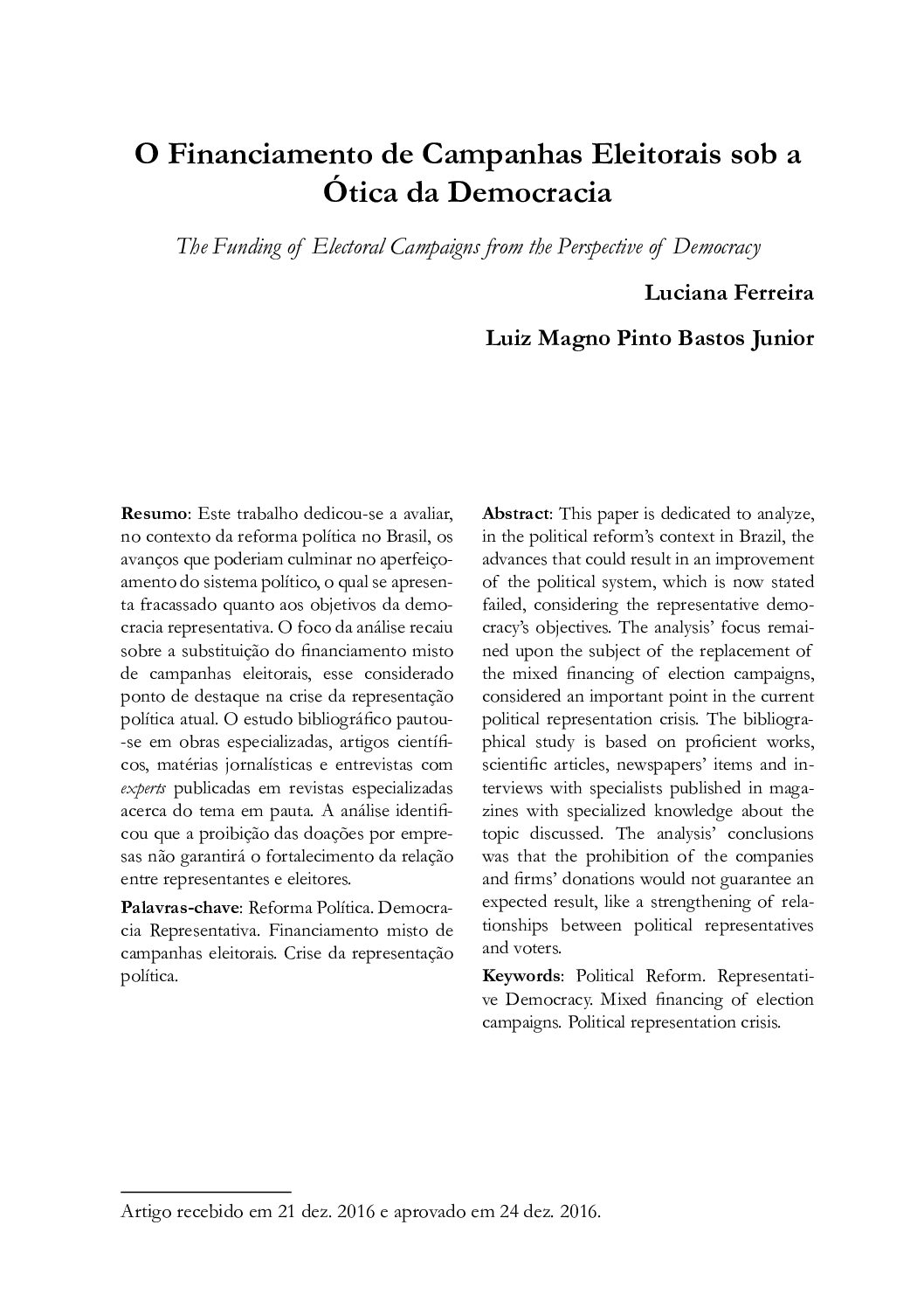
Authors: Luciana Ferreira and Luiz Magno Pinto Bastos Junior Abstract: This paper is dedicated to analyze, in the political reform’s context in Brazil, the advances that could result in an improvement of the political system, which is now stated failed, considering the representative democracy’s objectives. The analysis’ focus remained upon […]
22 de November de 2016
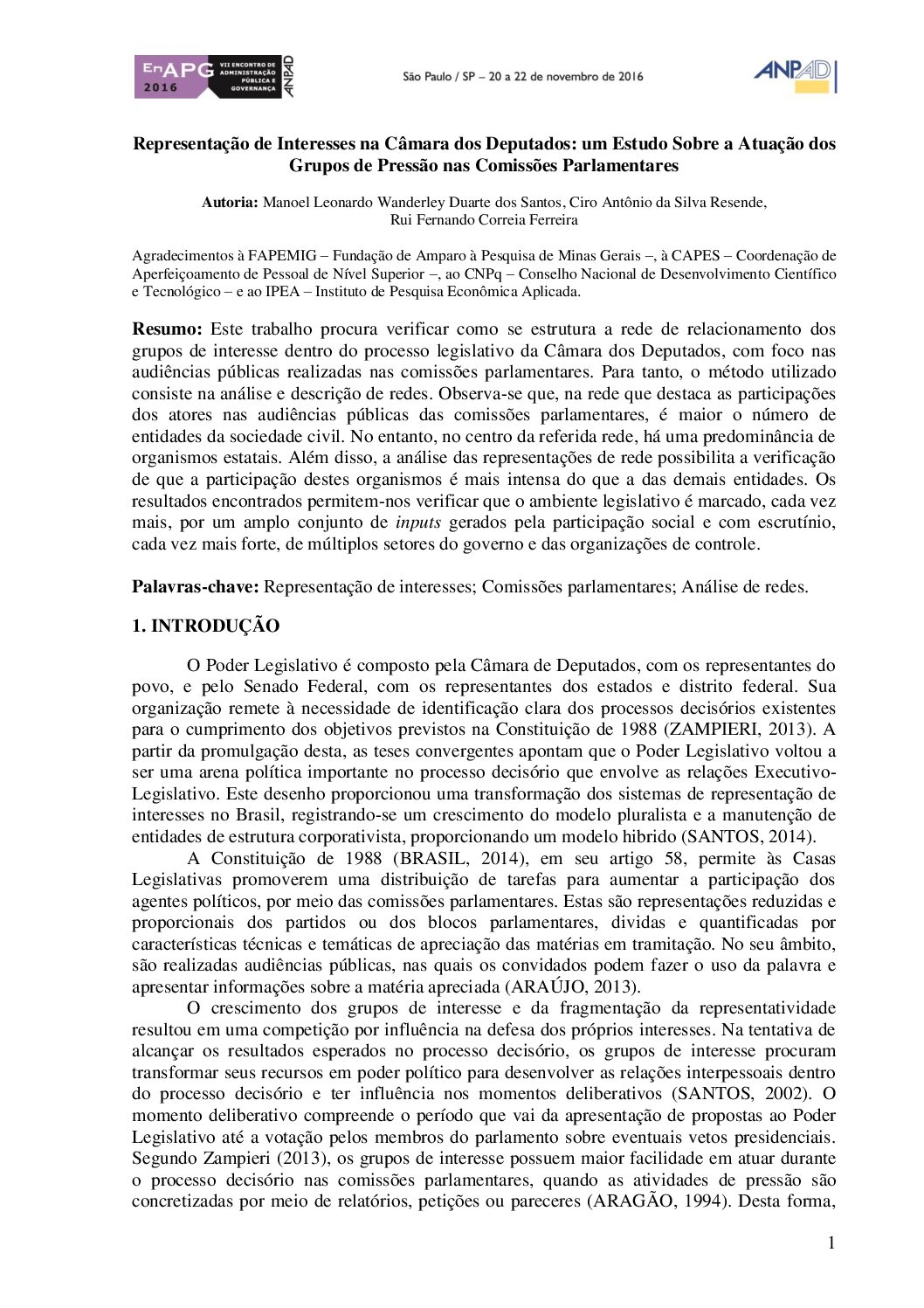
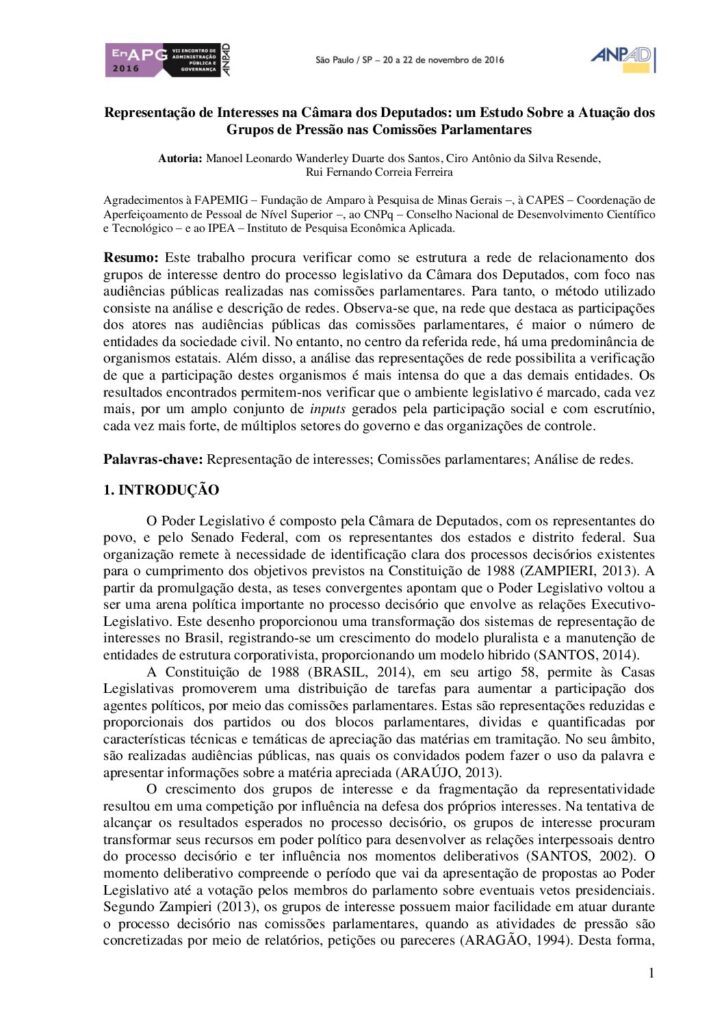
Authors: Manoel Leonardo Wanderley Duarte dos Santos, Ciro Antônio da Silva Resende and Rui Fernando Correia Ferreira Abstract: This study seeks to examine the structure of the network of relationships among interest groups within the legislative process of the Chamber of Deputies, focusing on public hearings held in parliamentary committees. […]
4 de October de 2016

Author: Eduardo Ribeiro Galvão Abstract: The complexity of social group participation in public policy decision-making processes demands an understanding of the institutional environment of this interaction between public and private agents. Democracy is not limited to the moment of voting. On the contrary, the modern concept of participatory democracy challenges […]
26 de September de 2016
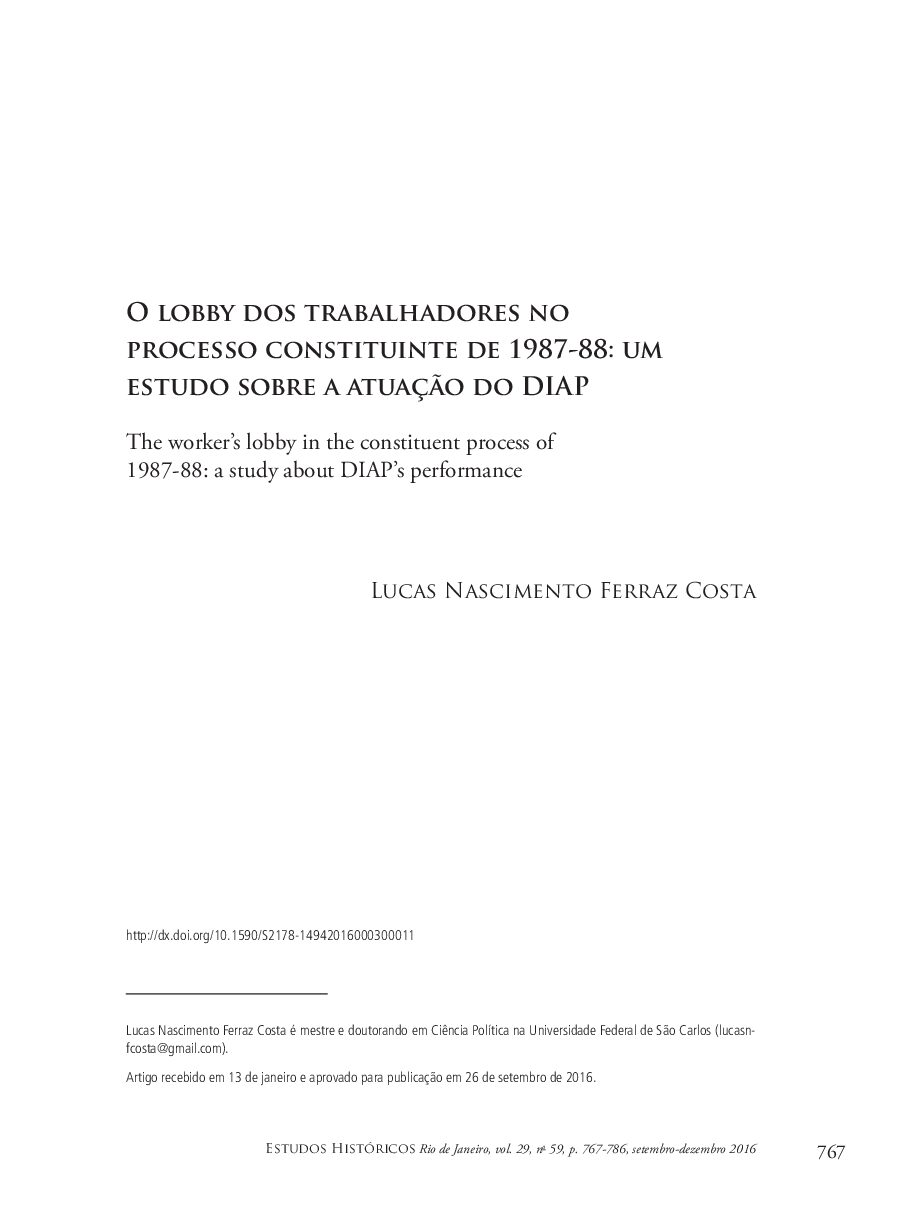
Author: Lucas Nascimento Ferraz Costa Abstract: The aim of this paper is to show the influence of interest groups in the constitutionalization of labor rights during the constituent process of 1987-88. We sustain that the working class interests were articulated by the Inter-Parliamentary Advisory Department (DIAP), through a consensual project […]
4 de August de 2016
Author: Louise Ronconi de Nazareno Abstract: This dissertation discusses three intertwining areas of social policy social Assistance, food security, and income transfer programs in relation to the recently formed Ministry of Social Development and Fight against Hunger (MDS) in Brazils post-democratization period (1988-present). I analyze how these social policy programs […]
1 de August de 2016
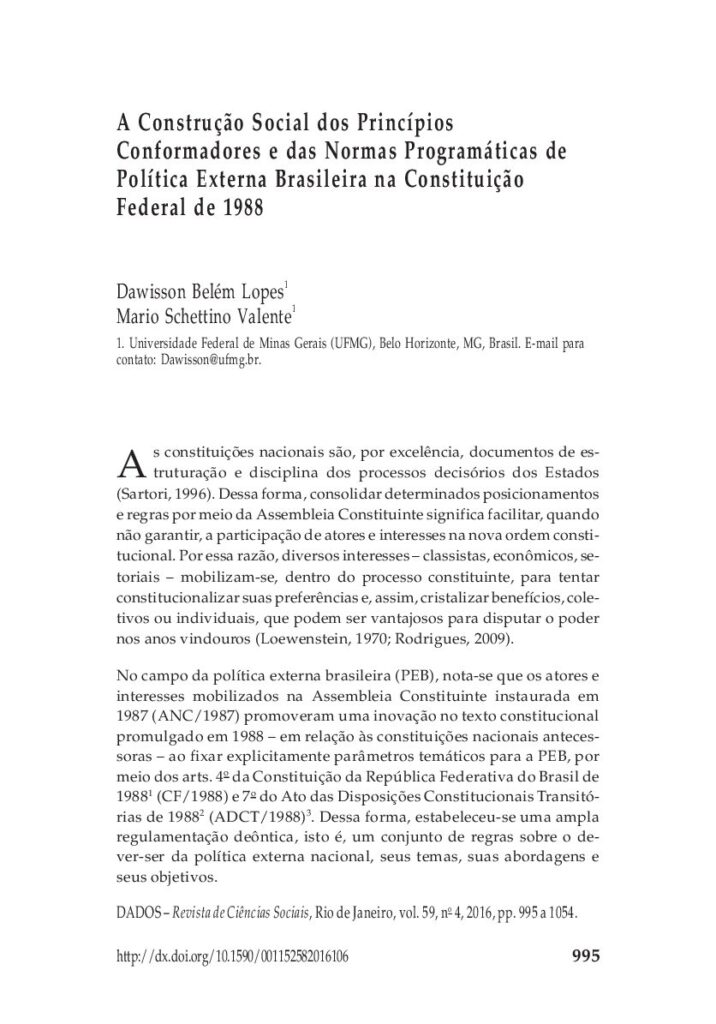
Authors: Dawisson Belém Lopes and Mario Schettino Valente ABSTRACT: The following article delves into the Constituent Assembly of 1987-1988 in order to investigate the social construction of the constitutional devices regulating the aims and approaches of Brazilian foreign policy. Research has therefore been conducted into literature on groups of interest […]