


Potentialities, impasses and interactions between policies: a study on Social Assistance, Food and Nutrition Security and Income Transfer
21 de August de 2025
Political reform of the state and democratization
2 de November de 2025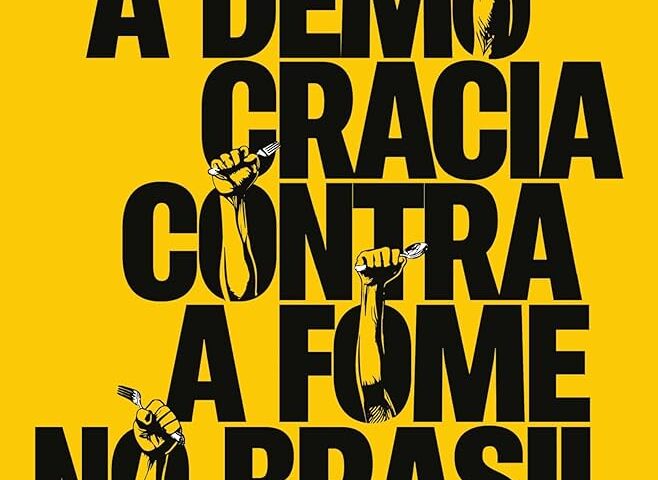
Author:
Iraneth Rodrigues Monteiro
Abstract:
“Democracy Against Hunger in Brazil,” according to Professor João Maia of the Center for Research and Documentation of Contemporary History of Brazil (CPDOC) at the Getúlio Vargas Foundation (FGV), is the collective history of the struggle for the right to food security, promoted by social movements, political and religious leaders, parties, and intellectuals. Through objective prose, yet committed to its theme, historian and public administrator Iraneth Rodrigues Monteiro shows us the advances and setbacks of this history, as well as the conflicts and controversies common to mass democracies. The historical panorama unveiled by the author allows the reader to situate recent and successful policies, such as Bolsa Família, within the long history of initiatives that had been developing since the 1988 Constitution and gained initial formalization during Fernando Henrique Cardoso’s two terms in office. Iraneth Monteiro also offers a keen look at episodes that are less remembered today, such as the creation of the National Council for Food Security during the Itamar Franco administration, in a concerted effort that brought together actors from civil society, such as the unforgettable Betinho, religious figures, and left-wing politicians. This work also reveals little-known information about the complex decision-making process that led Lula’s first administration to integrate different social policies under the umbrella of the Bolsa Família Program, an option that sealed the fate of the Zero Hunger Program, its “competitor,” and decisively marked the final stage of the story told by Iraneth. “Democracy Against Hunger in Brazil” emerges at a delicate moment in the Brazilian conjuncture, in which the democratic process driven by the Constitution seems to be blocked. The global rise of the far-right and the authoritarian threats that still loom over the Republic make us look at our recent history with incredulity, as if the ambition of those times seemed implausible. But it is precisely because we are in such a critical moment that Iraneth Monteiro’s book becomes relevant. Ultimately, it is the mirror in which we can see the audacity of our dreams to rekindle the energy of Brazilian democracy.