


Organized Interests in the Permanent Committees of the Brazilian House of Representatives
26 de April de 2021
COMPARED ANALYSIS OF THE LOBBIES’ ORGANIZATIONAL STRATEGIES IN THE CONSTITUENT PROCESS OF 1987-88
28 de June de 2021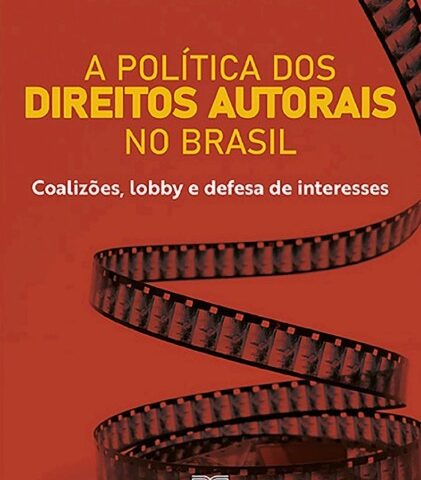
Author:
Nayara F. Macedo de Medeiros Albrecht
Abstract:
Copyright refers to the dimension of intellectual property that deals with culture, that is, the set of rights that apply to literary, artistic, and scientific works. As a field that moves a large volume of capital and income, discussions about public policies involve different segments with often antagonistic interests. This book serves two purposes. The first concerns reflection on the mechanisms for defending interests, including lobbying and its impacts on public policies. In this sense, the work exposes the means by which different social agents participate in public decisions in order to bring about a reflection on the relationship between lobbying and democracy. The second objective consists of analyzing political disputes related to copyright. Using the tools of Political Science, the book analyzes the conflicts and power asymmetries in the formulation of policies related to this dimension of intellectual property. Through the mapping of discussions and conflicts related to the topic in the three spheres of government – executive-administrative, legislative, and judicial – it shows how groups and organizations act politically to defend their interests before the Public Power. Thus, the work presents the concepts necessary to understand political disputes and the impacts of state and non-state agents on public policies, focusing on concepts related to advocacy and mobilization through lobbying. Regarding discussions on copyright, the book focuses on legislative debates following the approval of Law No. 12,853 of 2013, in addition to analyzing controversies in the Judiciary and the participation of the Executive Branch in different national and international forums. Therefore, besides presenting fundamental concepts and discussions for understanding the relationship between the State and civil society, the book traces the history of disputes over the regulation of copyright in Brazil.