


Copyright Policy in Brazil: Coalitions, Lobbying, and Advocacy
27 de April de 2021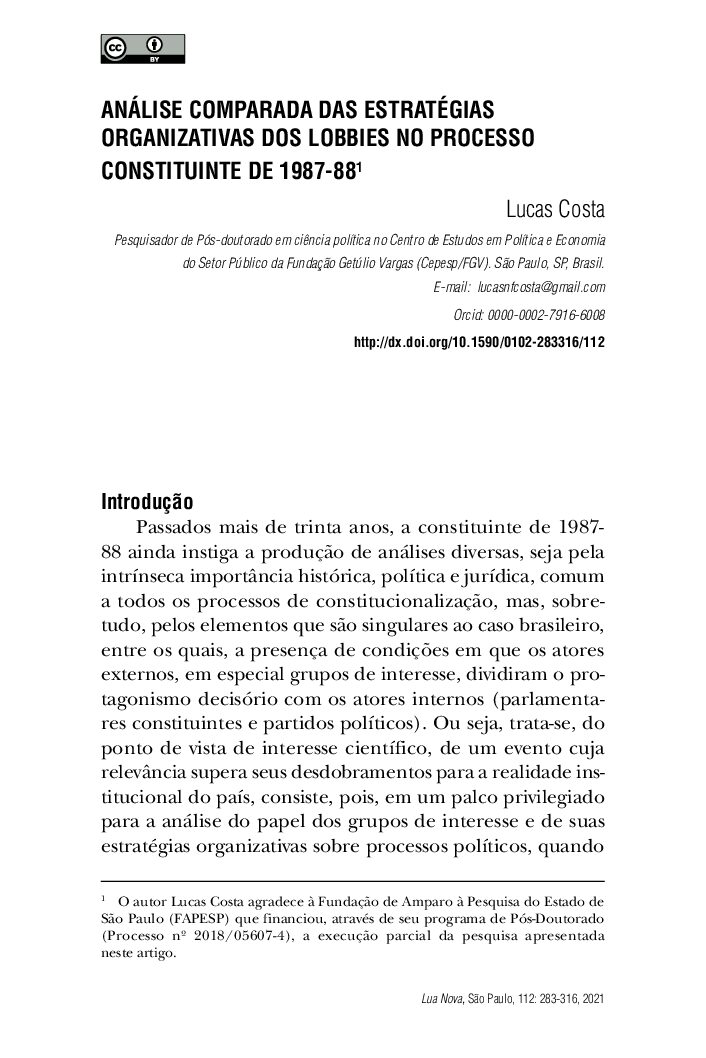
COMPARED ANALYSIS OF THE LOBBIES’ ORGANIZATIONAL STRATEGIES IN THE CONSTITUENT PROCESS OF 1987-88
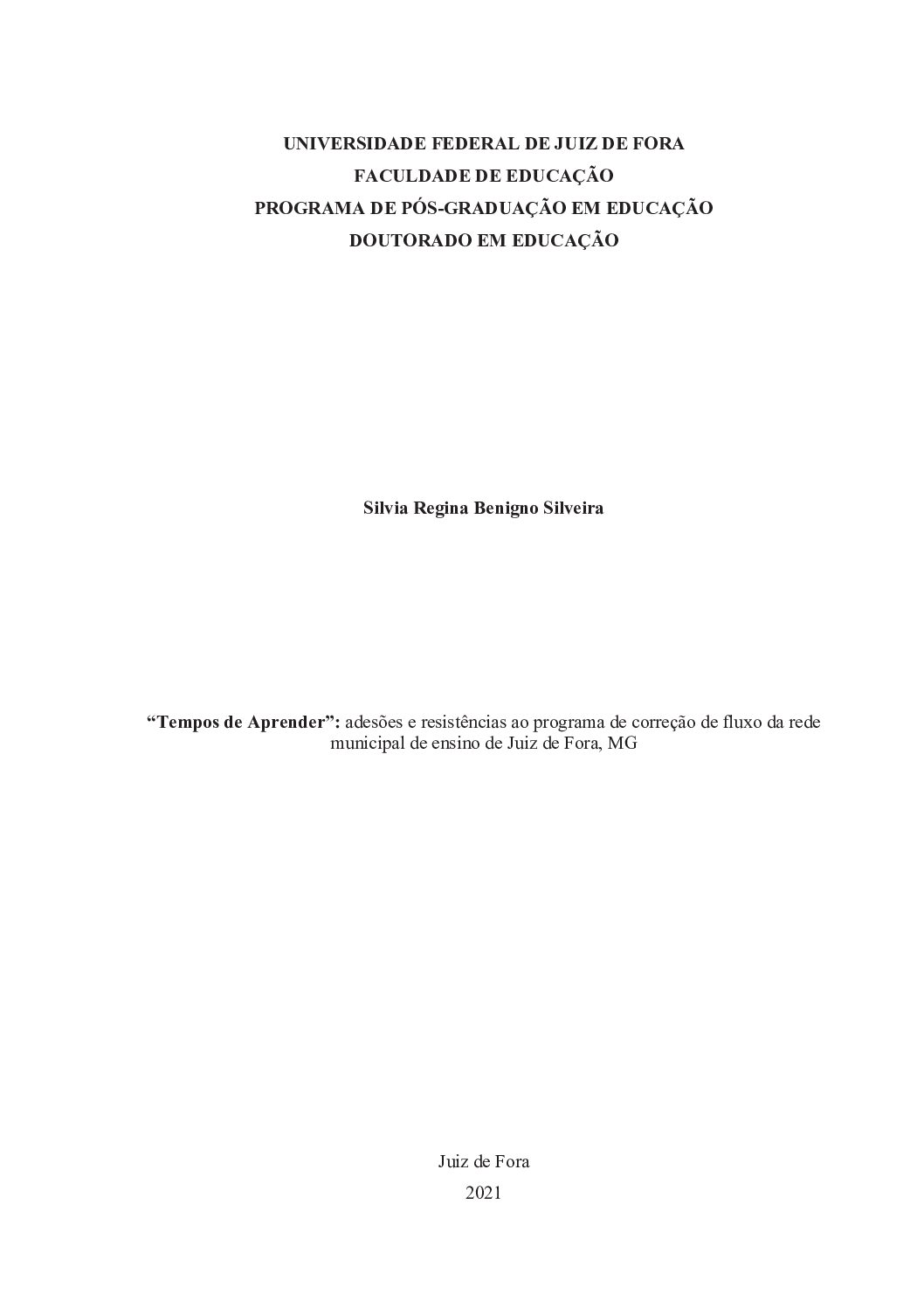
28 de June de 2021“Time to Learn”: Adherence and resistance to the program to correct the flow of the municipal education network in Juiz de Fora, MG
Author:
Silvia Regina Benigno Silveira
Abstract:
The aim of this work is to show how the school flow correction policy happened-Project “Time to Learn” in the city of Juiz de Fora. We focused on identifying which were the social and political uses of this Project by diferente actors involved in it, and also its implications for the municipal education of Juiz de Fora from these perspectives. The methodology followed was predominantly qualitative. Fourteen schools taking part in the Project were selected for this research from the beginning of 2015 to 2018 as a defined time frame for the research. The data collection methods used were documentar and structured research (via email) as well as semistructured interviews that favored the understanding of the corpus analysis. To support the data analysis, was used- Laurence Bardin for the contente analysis, and the approach to the policy cycle proposed by Stephen Ball and collaborators (1992; 1994), in order to figure out the political trajectory. The policy enactment in Ball, Braun and Maguire’s (2012; 2016) for the policy put into practice. Authors such as Bernard Charlot (2000; 2013; 2016), Miguel Arroyo (2000; 2011; 2014) and Rui Canário (2006) were fundamental to understand the phenomenon of school failure, the main source of feeding policies for accelerating the learning process. From this analysis, it was possible to identify that a policy, when put into practice, takes different configurations from those thought by its policy makers, which can compromise the chances of reaching its objectives.Through this intense process of adhesions and resistance to the proposed policy the indicators presented allowed us to conclude that the project effectively contributed to the reduction of age-grade distortion indices in the municipality, promoting the correction of the flow. And the students in age-graded distortion are considered to be the main factor for resistance to the policy. I do hope that all my considerations contribute to these kinds of policies so that, when put into practice, they can take into account the needs and the real conditions of schools, without losing sight of the initial objectives of this proposal.