


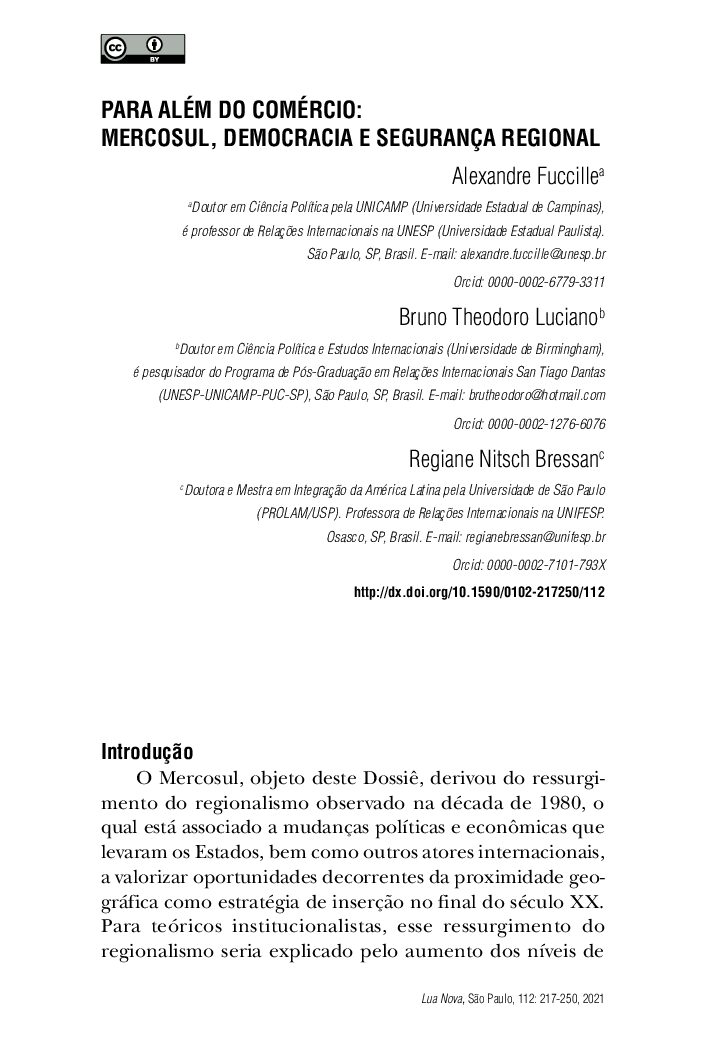
BEYOND TRADE: MERCOSUR, DEMOCRACY AND REGIONAL SECURITY
25 de March de 2021
UNLIKELY JOURNEY: THE STORY OF RENOVABR, THE SCHOOL THAT WANTS TO CHANGE POLITICS IN BRAZIL
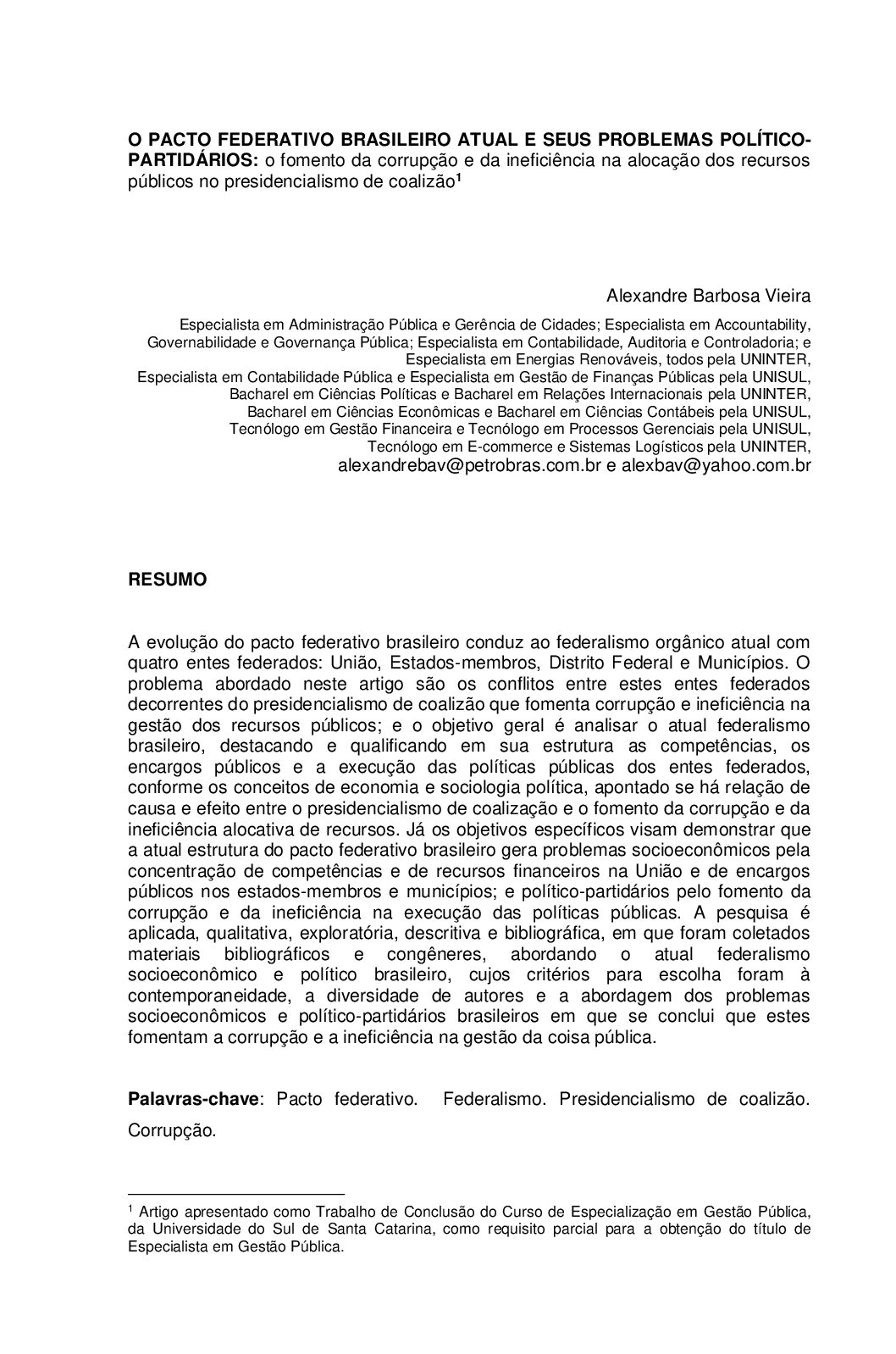
7 de April de 2021The current Brazilian Federal pact and its political-party problems: promoting corruption and inefficiency in the allocation of public resources in coalition presidentialism
Author:
Alexandre Barbosa Vieira
Abstract:
The evolution of the Brazilian federal pact leads to the current organic federalism with four federated entities: the Union, the member states, the Federal District, and the municipalities. The problem addressed in this article is the conflicts between these federated entities arising from the coalition presidentialism that fosters corruption and inefficiency in the management of public resources; and the general objective is to analyze the current Brazilian federalism, highlighting and qualifying in its structure the competences, public responsibilities, and the execution of public policies of the federated entities, according to the concepts of economics and political sociology, pointing out whether there is a cause-and-effect relationship between coalition presidentialism and the fostering of corruption and allocative inefficiency of resources. The specific objectives aim to demonstrate that the current structure of the Brazilian federal pact generates socioeconomic problems due to the concentration of competences and financial resources in the Union and of public responsibilities in the member states and municipalities; and political-partisan problems due to the fostering of corruption and inefficiency in the execution of public policies. This research is applied, qualitative, exploratory, descriptive, and bibliographic, in which bibliographic and similar materials were collected, addressing the current Brazilian socioeconomic and political federalism. The selection criteria were contemporaneity, diversity of authors, and the approach to Brazilian socioeconomic and political-partisan problems, concluding that these foster corruption and inefficiency in the management of public affairs.